Showing posts with label Book review. Show all posts

Monday, May 11, 2009

Prados unconvincing history of the Vietnam war


12 years old Vietcong child soldier Nguyen Van Thang of the Vietcong Quyet Thang Regiment, captured by the Vietnamese Marines at Go vap during the TCK-TKN Tet offensive of 1968. Thang is one of many children employed as soldiers by the Vietcong during the war (source Trận chiến Tết Mậu Thân 1968 by Phạm Văn Sơn)


In recent years with an influx of de-classified information from the U.S, the Communists and memoirs from former S. Vietnamese soldiers and officials, we get a much better and clearer view of the Vietnam War and its aftermath. This gives rise to the “revisionist” historians who show the Vietnam War in a much different light, dispelling many of the myths from the left. John Prados’ “Vietnam: The History of an Unwinnable War, 1945-1975″ is an attempt to hold back the more accurate view of the Vietnam War and resuscitate the old leftist view of the Vietnam War.

Prados argues that America's failure in Vietnam was due to the lack of understanding of the Vietnamese revolution. Prados portrayed Ho as a “nationalist”, the George Washington of Vietnam. However, Ho Chi Minh in his twelve volumes “Ho Chi Minh Toan Tap”[Ho Chi Minh Complete Works] documents Ho extensive works for the Third International and even how much Ho was paid each month by Moscow for his works[1]. These documents made it clear that Ho was a devout Communist since the early 1920’s and not a “nationalist” forced to ally with the Communist.

It’s interesting that Prados would consider Ho a hero contrary to the view held by former Communists such as Bui Tin, Tran Khai Thanh Thuy, Vu Thu Hien. In his book “From Enemy to Friend” and his interview with Radio Free Asia on July 12, 2006, Bui Tin admits that Ngo Dinh Diem was a better person and a patriot. Diem did not give an inch of Vietnamese soil to the Americans, unlike Ho who ordered Prime Minister Pham Van Dong in 1958 to send a letter to the PRC recognizing the PRC claimed to the Truong Sa and Hoang Sa archipelagos [2]. At the time, the Truong Sa and Hoang Sa archipelagos belong to the Republic of Vietnam (the archipelagos have been acknowledged as Vietnamese territories by European countries and China since the 17th century). The PRC interest in the archipelagos is understandable since the archipelagos have been found to contain huge oil deposit.

There were three major land reform programs in Vietnamese history, conducted by Ho, Diem and Thieu. Diem and Thieu use foreign aids and bonds to buy land from land owners and give the land to poor, landless tenants for free. Diem program was smaller in scale and Thieu “Land to the Tiller” program in 1970 was the biggest land reform program in S. East Asia and no one was executed or dispossess. On the hand, the Vietnamese Communist recently admitted in the book “Lich Su Kinh Te Viet Nam 1945-2000” that 172,008 people were labeled as “landowners” were “punished” (i.e. executed) by Ho’s government [3].

Bui Tin, a former Vice Editor of the Communist newspaper Nhan Dan and a participant in the Land Reform Program said that at least 500,000 North Vietnamese died during the land reform programs. Land confiscated from landowners were given to landless tenants but later Ho’s government levied high taxes against the new landowners and the peasants ended up “donating” their land to the Hợp Tác Xã [Cooperatives] because they could not afford to pay the taxes. According to Bui Tin from the time of the Land Reform Program up to 1985, many North Vietnamese were starving because of the low output from the Cooperatives. The private gardens in North Vietnam which comprise of only 5% of the total cultivated land produce as much food as the output from all of the Cooperatives [4].

Images from the Land Reform Program (source Dmitri Baltermants)

Land Reform image (source: Dmitri Baltermants)

source Dmitri Baltermants


Prados portrait the U.S and the South Vietnamese as incompetent fools who can do nothing right. Prados claim that in 1959, the Communist forces in South Vietnam totaled only 2,900 and that the ARVN outnumber the Communist 40 to 1, this is contrary to the official Communist sources such as the National Liberation Front official history “Chung Mot Bong Co” , the Communists claim they have a presence in all 44 provinces of South Vietnam. In the Đông–Nam-Bộ area consisting of 4 provinces Quảng Nam, Quảng Ngai, Bình Định, Phú Yên, the Communist number over 150,000 during the war against the French and few of these people repatriate North after 1954. On the other hand, the ARVN total only around 119,000 from 1955 to 1959. The Communists also admit that in many provinces, the number of Communists dwindles from 30,000 to 160 after massive defection and losses to the Diem government [5].

Prados made a big deal of the ARVN desertion rate while ignoring the fact that the ARVN desertion rate is roughly the same as those of the Communists. Moreover, Prados ignore the 300,677 Communist, who defected to the South Vietnamese from the inception of the Chieu Hoi program in 1963 to 1970 while only one ARVN regiment surrendered to the North Vietnamese during the war[6].

Prados claimed that the Tet offensive was a defeat for the U.S. The bombing of Kampuchea was branded as secret and illegal and the U.S and ARVN incursion into Kampuchea in 1970 to break up North Vietnamese sanctuaries was presented as a move that widened the war. Prados ignore the fact that the Sihanouk was openly helping the North Vietnamese. The Khmer army helps transport weapons and materials for the North Vietnamese. Sihanouk was pay for his “cooperation” of up to 10% of the values of the materials shipped to the Vietnamese Communist forces in Kampuchea. The Khmer Rouge first started arm insurgency in the 1950’s under the name Khmer Issarak. The Khmer Communists harass South Vietnamese forces along the Vietnam-Kampuchea border long before the U.S-ARVN Cambodia incursion [7]. If anyone is to blame for the Kampuchea debacle it’s Sihanouk, who thought he could “play” his enemies not knowing it was he who was being play.


Norodom Sihanouk, Saloth Sar (Polpot) and victims of the Khmer Rouge genocide


During the Vietnam War, Communist laws required that each able body men and women in North Vietnam spend several months out of each year to work for free for the government to support the war effort. Those who do not are often labeled as reactionary, counter-revolutionary activists and sent to work as slaves in the Corrective Labor Re-Education camps. The conscripted laborers have been use in the past in Viet Nam, especially during the Lý and Trần dynasty. However, the feudal governments always pay and grant tax exemptions to their civilian laborers unlike the Communist. The system of conscripted laborers has been employed by the Communist since the war against the French and made into law in June 1967 with Nghi Quyet 161/NQ/TƯ [8]. The Communists extensive use of civilians and POW to transport weapons and war materials is a blatant violation of the Geneva Conference, had the U.S and the South Vietnamese conduct war in such a fashion, Prados would probably be up in arms but since it’s being conducted by the North Vietnamese, we hear no complaints from Prados.

Prado' book contains a picture of a mascot of the in ARVN Airborn wearing an ARVN uniform and Prados was quick to insinuate that the ARVN was drafting younger recruits, although there is absolutely no evidence that the ARVN was using children as a tool of war. However, the North Vietnamese have no qualm in using children as part of their war effort with the creation of the Đội Thiếu Niên Nhi Đồng Cứu Quốc in 1941 which later become the Đội Thanh Niên Tiền Phong.

Children were used by the Communists to retrieved bombs and anti-personnel mines with their bared hands, Communist documents boasted about their system of using children soldiers such as Le Van Tam of Sai Gon who killed many Frenchmen by lighting himself with gasoline and become known as the “human torched”. Little Duong Van of Ha Noi singlehandedly killed 3 Frenchmen and “died heroically in battle” during an ambush at Xay Gia, Son Tay. There were other child soldier groups such as the Doi Thieu Nien Du Kich Thanh Hue, Doi Thieu Nien Du Kich Dong Thap Muoi.


A children book about the Children Guerrilla Group of Hue

Children Guerillas Group of Hue

Children of the Socialist Republic of Vietnam celebrating the anniversary of the Children Guerrilla Group of Dinh Bang


A children book glorifying the exploits of the Children Guerrilla Group of Dinh Bang


Members of the Vietcong Children Guerrilla Group


Communist books are full of glorious stories about children as young as 8 or 10 killing and dying for Uncle Ho such as child hero Ho Van Nhanh near Dong Tam who uses his bare hand to retrieve several thousands mines which he gave to the local guerrillas and they in turn uses it to kill 300 Yankees and many puppets[ARVN] soldiers. One children group in August 1968 stole over 13 rifles from the Yankees and puppets. At Cu Chi, in April 1968, children stole 23 weapons from Yankees and puppets. Child hero Ho Thang, a 14 years old boy who in April 6 1964 along with his group shot down a Yankee plane and capture a Yankee pilot named Thompson. Ho Thang received the prestigious Huan Chuong Chien Cong Giai Phong medal, and he was later killed in battle.

Another child hero, a 12 years old boy called Rít in Quang Nam help shot down several Yankee planes in 1967. There were many famous children Guerrilla groups employ by the Communist forces such as the “Du Kich Tre Con Dieu Cai” and the famous “Du Kich Tre Con Phan Khu I” [Children Guerrilla Group of Zone I] who help planted mines that destroy 5 Yankees and puppets tanks. The Thieu Nhi Du Kich Dau Tieng [Children Guerrilla Group of Dau Tieng] uses mines to kill 50 Yankees and puppets. At Dien Ban, the children guerrilla group there in six months of operations killed 80 Yankees and puppets and received the highest medal of honor from the National Liberation Front of South Vietnam, Huan Chuong Chien Cong Giai Phong Hang Nhat. Communist sources claimed that the children combat group at Dien Ban fought over 100 battles with the Yankees and puppet troops winning every battle[9].

The gravestone of Private LeTrung Tuong born in 1959, drafted into the Vietcong on April 1968 sacrificed on May 1, 1971 (source http://blog.360.yahoo.com/blog-OIVyEUo6danA1OYCzH9d?p=78)


A Vietcong Children Guerrilla Group
The lower class and peasant's children often have the honor of fighting and dying for Uncle Ho, while children from the Communist ruling elites were usually sent to study abroad
(source http://blog.360.yahoo.com/blog-OIVyEUo6danA1OYCzH9d?p=78)


Children and teenagers as members of the 559th Group on the Ho Chi Minh Trail (source http://blog.360.yahoo.com/blog-OIVyEUo6danA1OYCzH9d?p=78)


Mr. Prados ends his book in 1975, conveniently covering up and ignoring what happen to Vietnam after communists took over. Prados ignore the millions of Vietnamese were sent to work as slaves in the “Corrective Labor Re-Education” camps, the slave laborers in the New Economic Zone, the fate of children who were forbidden from attending schools because of their parents' background. Massive confiscation of personal property and businesses through the “Danh Tu San, Mai Ban” [Smash the bourgeois] programs resulted in ten of thousands of people losing their homes and livelihood. Hundred of thousands of Vietnamese escape Vietnam by boats or by traveling through Cambodia and at least 1 million South Vietnamese out of a population of 18 millions died after the Communist takeover of South Vietnam [10]. Vietnam could have become another South Korea or Taiwan with the huge number of Western trained professionals; intellectuals and merchants instead Ho and his descendants drove these people out to the sea and destroy Vietnam' future for generations.


Boat People


[1] Hồ Chí Minh, Toàn tập tập 2 (Hà Nội: Nhà Xuất Bản Chính trị Quốc Gia, 1996), pp.324. Hồ Chí Minh, Toàn tập tập 3 (Hà Nội: Nhà Xuất Bản Chính trị Quốc Gia, 1996) , pp.90.

[2] Đặc Khảo Hoàng Sa và Trường Sa, Tập San Sử Địa. Saigon 1974. PRC’s declaration over the islands in 1958 Xinhua archives. Far East Economic Review March 16, 1979, pp. 11. Beijing Review August, 25 1979, pp.25. In 1992, Nguyen Man Cam the Foreign Minister of the Socialist Republic of Vietnam admits that the Communists under Ho gave away the Paracel and Spratly archipelagos to the People Republic of China:

“Our leaders’ previous declaration on the Hoang Sa (Paracel) and Truong Sa (Spratly) archipelagos was made in the following context: At that time, under the 1954 Geneva agreement on Indochina, the territories from the 17th parallel southward including the two archipelagos were under the control of the South Vietnam administration. Moreover, Vietnam then had to concentrate all its force on the highest goal of resisting the US aggressive war to defend national independence. It had to gain support of friends all over the world. Meanwhile, Sino-Vietnamese relations were very close and the two countries trusted each other. China was according to Vietnam a very great support and valuable assistance. In that context and stemming from the above-said urgent requirement, our leaders’ declaration [supporting China’s claims to sovereignty over the Paracel and Spratly islands] was necessary because it directly served the fight for the defense of national independence and the freedom of the motherland.

More specifically, it aimed at meeting the then immediate need to prevent the US imperialists from using these islands to attack us. It has nothing to do with the historical and legal foundations of Vietnam’s sovereignty over the Truong Sa and Hoang Sa archipelagos (remarks to a press conference in Hanoi on 2 December 1992 carried by Vietnam News Agency, 3 December 1992).”

[3] Đặng Phong, Lịch sử kinh tế Việt Nam 1945 – 2000. Tập II: 1955 – 1975 (Hà Nội: Nhà Xuất Bản Khoa Học Xã Hội, Ngày 29 tháng 10, 2006), pp. 575-615.

[4] Bùi Tín, “ Nhìn lại cuộc Cải cách ruộng đất: Những bài học còn nóng hổi” Novermber, 11 2006.

[5] Chung Một Bóng Cờ (Hà Nội: Nhà Xuất Bản Chính Trị Quốc Gia, 1993), pp. 50-51.

[6] Xuân Vũ và Dương Đình Lội, 2000 Ngàn Ngày đêm Tử Thủ Củ Chi (Houston: Đại Nam,1991), pp.348 . Dương Đình Lôi was the military commander of the Communist forces at Cu Chi from 1965 to 1970.

[7] 77 Conversations Between Chinese and Foreign Leaders on the Wars in Indochina, 1964-1967( COLD WAR INTERNATIONAL HISTORY PROJECT. WOODROW WILSON CENTER, WORKING PAPER, NUMBER 22) . Trường Sơn. Cuộc Hành Trình Năm Ngàn Ngày Đêm Đường Hồ Chí Minh (Thành Phố Hồ Chí Minh: Nhà Xuất Bản Văn Nghệ, 1992), pp.145. Ibid, Đặng Phong 575-615. Trường Sơn is the pen name of the People Army of Vietnam Colonel Phạm Tề.

[8] Bùi Ngọc Thanh, Giải Toán Nhân Lực Thời Chiến – Một Trí Tuệ Tuyệt Vời của Đảng. Tạp Chí Cộng Sản (Số 2 (146) 2008). Văn kiện Đảng toàn tập, Tập 28 (Hà Nội: Nhà Xuất bản Chính trị quốc gia, 2003) ,pp. 346-358 [Official documents of the Vietnamese Communist Politburo Volume 28]. Tạp Chí Cộng Sản is the official magazine of the Vietnamese Communist Party.

[9] Lich Sử Đoàn Thanh Niên Cộng Sản Hồ Chí Minh Tổng Kết Cuộc Kháng Chiến Chống Mỹ Cứu Nước Thắng Lợi và Bài Học (Hà Nội: Nhà Xuất bản Chính trị quốc gia, 1996). Văn kiện Đảng toàn tập, Tập 28 (Hà Nội: Nhà Xuất bản Chính trị quốc gia, 2003) ,pp. 346-358 [Official documents of the Vietnamese Communist Politburo Volume 28]. Đào Ngọc Dung , Lịch Sử Đội Thanh Niên Tiền Phong (Hà Nội : Nhà xuất bản Thanh Niên, 2004), pp.314 -325. 15-5-1941 Thành lập đội thiếu niên nhi đồng cứu quốc, http://maxreading.com/?chapter=2999.

[10] Rummel, R. J., Death by Government. (Transaction Publishers, 1997). Desbarats and Jackson, “Vietnam 1975 1982: The Cruel Peace,” 8 Wash. Q. 4 (Fall 1985), at 169. Anh Do and Hieu Tran Phan, Millions of lives changed forever with Saigon’s fall. Orange County Register (Sunday April 29 2001). Sagan, Ginetta, and Stephen Denney. Violations of Human Rights in the SRV, April 30, 1975-April 30, 1983. (Atherton, California: Aurora Foundation, 1983).Như Hằng, Đời Ông Chủ. Tuổi Trẻ Online (April 13 2006). Nguyễn Văn Tiến Hùng. Những chuyện ai cũng muốn quên. Tuổi Trẻ Online (July 10 2008).




Tuesday, April 28, 2009

ARVN a Book Review

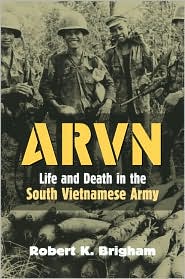
I 'm an avid reader, especially things regarding the Viet Nam War. A year ago, I purchased ARVN: Life and Death in the South Vietnamese Army by Robert K. Brigham. The book was supposed to give an in-depth history of the ARVN from 1955 to 1975, Robert Brigham claimed that his book will take readers into the barracks and training centers of the ARVN to plumb the hearts and souls of these forgotten soldiers. The biggest problem I have with this book is that the author claimed to have studied the ARVN yet he is either ignorant or conveniently ignore how the ARVN (Army of Vietnam), PAVN (People Army of Viet Nam or North Vietnamese Army) and the National Southern Liberation Front of Viet Nam (also known as the NLF or Viet Cong forces) utilize logistical supports.


This author as well as others tends to dwell on the fact that the ARVN had more non-combat and support troops than the PAVN or National Southern Liberation Front. Since the early days of the Viet Minh, the Vietnamese Communist has employed civilian laborers to fight their war. The use of civilian' laborers has been use in the past in Viet Nam even in war, especially during the Ly and Tran dynasty. However, the feudal government always pays civilian laborers and if people or villages were employed at war, all received just compensation and were also exempt from taxes for several years.

The Vietnamese Communist, on the other hand, did not pay for civilian laborers. Each able body male or female in North Viet Nam during the war against the French and the war against the U.S and RVN is required to spend several months out of each year to work for free for the government to support the war effort. Those who do not are often labeled as reactionary, counter-revolutionary activists, imperialist lackeys and sent to work as slaves in the Corrective Labor Re-Education camps, these “re-reactionaries” are often sentenced without trials and some spend 20 years or more as laborers in such camps. The system of civilian slave laborers has been employed by the Communist since the war against the French and in 1967, they reaffirmed this with Nghi quyet 161/NQ/TU in June 1967.

The North Vietnamese also made extensive use of children as part of their war effort with the creation of the Doi Thieu Nien Nhi Dong Cuu Quoc in 1941 which later become the Doi Thanh Nien Tien Phong. Children were used by the Communists to retrieve bombs and anti-personnel mines with their bare hands, the Communist boasted about their system of using children soldiers as a great way of fighting war [1].
The Army of Republic of Viet Nam (ARVN) could have used the North Vietnamese model to reduce their “tail” but they did not want to deliberately endangered civilians by forcing them to transport supplies. Instead the ARVN employ local people into the Regional and Popular Forces and trained them to defend the local people from the invading North Vietnamese.

Source Nguyen Ngoc Hanh

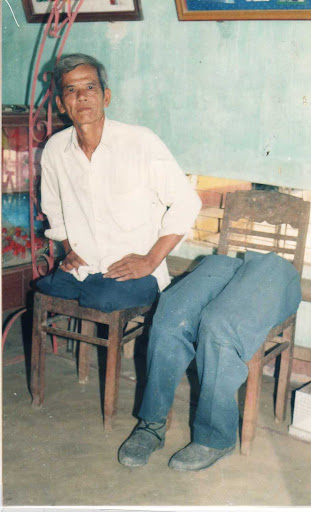
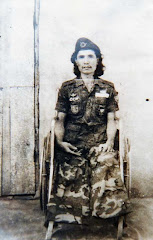
Disable ARVN vet

This author recognizes the fact that the ARVN performance improved in 1969 and the later years, but he claims it was too late. That is a very superficial analysis, the author did not seem to know why the ARVN improved after 1969, and he made the mistake of assuming that they did not do well before 1969. The War in Viet Nam started in 1955 and ended in 1975. The ARVN perform well from 1955 to 1963. The ARVN and the RVN successfully destroyed almost all the network the Communist has meticulously set up during the work against France. The Communist divided South Vietnam into 9 zones, and Communist sources shows that in many zones, the number of Communists dropped from 20,000 - 30,000 down to 160 from 1955 to 1959 due to Diem attacked on their forces[2].

The ARVN performance dropped markedly from 1964 after the murdered of the Diem brothers and the systematic dismantling of the Diem administration Strategic Hamlet and the South Vietnamese Doan Cong Tac Mien Trung Counter-intelligent group. In 1965, the constant political turmoil in South Viet Nam and the increase in North Vietnamese infiltration into South Viet Nam, the upgrade and standardization of Communist force weapon tip the scale of the balance to the Communist forces. While the Communist forces in 1965 were using AK-47 and B-40, the ARVN still used the antiquated M-1 Carbine and M1 Garant. 1965 to 1967 were the dark days of the ARVN but many units such as the paratroopers and VNMC (Vietnam Marines) still fought well. Although 50 percent of the ARVN was on leave, the remaining troops fought well repelling the Communist forces during the TCK-TKN offensive of 1968 [also known as the Tet Offensive].

Hue 1968 (source Nguyen Ngoc Hanh)

The U.S refusal to invade North Viet Nam or permanently cut off the Ho Chi Minh trail and the misguided employment of the “Search and Destroy” operations only contributed to prolong the Viet Nam War as well as worsening the military situation in South Vietnam. In 1969 when Abrams took over and start supplying the ARVN (regular and territorial forces) with modern M-16 and start using “Clear and Hold” strategy and the ARVN performance dramatically improved. The ARVN performance keeps improving after they were fighting alone. Vo Nguyen Giap admitted in his memoir "Tong Hanh Dinh Trong Mua Xuan Toan Thang" that after suffering severe reverses and losing territories to the ARVN, the Vietnamese Communist Politburo has to convene on 24-5-1973 to discuss the cause of their reverse and the situation in South Vietnam[3].

In 1965 the U.S Army used around 100,000 tons of ammunition a month alone[4] not counting the ammunition usage from the U.S Navy, USMC and U.S Air Force while most of the major battles fought against the Communist during 1965 involved Communist regimental size units. Since 1970, the tempo and intensity of the war increased exponentially as the U.S withdraw troops.


In 1965 the U.S Army used around 100,000 tons of ammunition a month alone[4] not counting the ammunition usage from the U.S Navy, USMC and U.S Air Force while most of the major battles fought against the Communist during 1965 involved Communist regimental size units. Since 1970, the tempo and intensity of the war increased exponentially as the U.S withdraw troops.

In 1972 the ARVN fought major battles involving multi PAVN divisions while the ARVN uses around 56,00 short tons of ammunition per month. From 1973 to 1975, the ARVN uses less than 19,000 tons of ammunition per month even during the heaviest fighting of the war when major battles were fought against multi-army corps of the PAVN. The ARVN still good a good account of itself in 1974 but due to the drastic shortage of ammunitions and equipments, victories came at great cost.

The former Minister of Planning and Economic Development of South Vietnam revealed that in the first 6 months of 1974 alone, the ARVN suffered 42,000 dead, 10,000 missing in action and presumed dead [mostly from remote outposts] and 109,000 wounded. In the last 6 months of 1974 the ARVN casualty get worst with bloodier battles like those at Thuong Duc, Tri Phap, Tien Phuoc, Rach Bap, Phuoc Long. In July of 1974, just in the Quang Nam province alone, the ARVN suffer 4700 casualties. Most of the ARVN garrisons and outposts lost in 1974 could be attributed to the superiority of the PAVN in man power and firepower, most of the remote garrison received no artillery support, limited air support and almost no rescued attempt were made except for a few strategic positions. For instances, Dak Pek was lost in May 1974 after 7,000 PAVN rounds destroyed much of the garrison defense, Nong Son was lost in July 1974 after most of the garrison defenses were devastated by 5,000 PAVN artillery rounds. Pleime was pounded by 10,000 artillery rounds of all kinds and suffered 20 ground attacks from the PAVN, but in this instance the ARVN received adequate artillery support and as such could hold off the PAVN[5].

By 1975, the ARVN were desperately running out ammunition, they were using less than 19,000 short tons of ammunition per month. After the war, the Vietnamese Communists claimed they captured 130,000 tons of ammunition from the ARVN[6] if such figure is to be believe, it means that even if the South Vietnamese did not surrender in April 30, 1975, the ARVN who were facing virtually the entire PAVN and NLF forces could not have survived more than a few weeks before they completely ran out of ammunition.

Also, contrary to the claimed of many Western "experts", the North Vietnamese did not receive fewer supplies from their allies after 1973. Recent Communist documents reveal the following:

- From 1961-1964: The North Vietnamese received 70,295 Metric tons of materials from the Soviet, China and other Communist countries.

- From 1965-1968: While fighting both the Americans and the ARVN, the North Vietnamese received 517,393 Metric tons of materials as well as 400,000 Chinese “advisers” to help protect North Vietnam.

- - From 1969-1972: the North Vietnamese received 1,000,796 Metric tons of materials.

- From 1973-1975: When they were fighting only the ARVN, the North Vietnamese received 724,512 Metric tons of materials, that is an average of 362,356 Metric tons per year. Furthermore, from 1970 to 1973, the People Army of Viet Nam [North Vietnamese Army]Group 559th who is responsible for transporting North Vietnamese materials to South Vietnam through the Ho Chi Minh Trail, increases their size to over 100,000 personnel. In 1973, after the North Vietnamese were no longer harassed by U.S air attacks, Group 559th increased in size to over 120,000 to accommodate more goods and materials coming down the Ho Chi Minh Trail.

- From 1973 to 1975, China supplies the North Vietnamese with over 500,000 rifles, 21,000 howitzers, 90,000,000 rounds of rifles cartridges, 4,500,000 artillery rounds of all kinds and this is just aids from China alone not counting aids from the U.S.S.R and other Communist countries. In 1973 alone, over 100,000 North Vietnamese soldiers successfully infiltrated South Vietnam that enables the Communist to maintain 410,000 troops in South Vietnam after 1973.

The North Vietnamese could maintain an army that at 11 percent of the population of North Vietnam throughout the war. In 1972 the total population of North Vietnam was estimated to be around 24.5 millions while the South Vietnamese total population is around 18 million[7] .

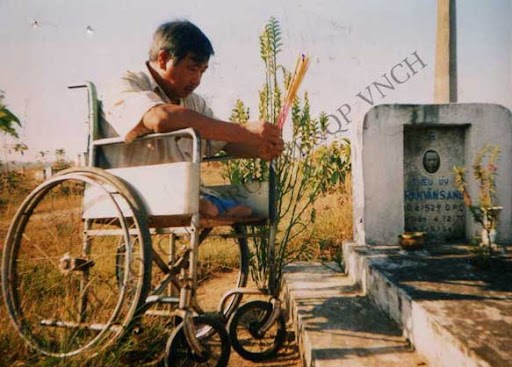
Legacies of war : ARVN disable vets

Disable ARVN veteran

During the 1972-1973 fiscal year, South Vietnam received 2.2 billion in both economic and military aids (slightly less than both the military and economic aids that North Vietnam received from the Soviet Union and PRC), this money includes the material from Enhance and Enhance Plus program in which new as well as secondhand equipments left behind by the US Arm Forces were counted as part of the aids. During fiscal year 1973-1974, this number was reduced to 964 millions.

For fiscal years 1974-1974, the U.S Congress made several revisions and the final military aid to South Viet Nam was reduced to 700 millions. U.S administrative costs were deducted from all aids to South Vietnam so the actual amount of aids allocated to the South Vietnamese was actually less than 650 millions. There is no shortage in aids the North Vietnamese received from their friends while the U.S cut off aids to the South Vietnamese drastically after 1973.

From 1972 to 1975, the ARVN Available Supply Rates (ASR) for artillery rounds had plummeted to unacceptable low levels (per tube, per day) supplies of 105mm artillery rounds drop from 180 rounds per month to 10, supplies of 155mm artillery rounds dropped from 150 per month to 5 per month, supplies of 175 mm rounds dropped from 30 to 3 per month. Over 4000 ARVN trucks, 600 boats and 400 out of 600 helicopters were rendered inoperative due to lack of spared parts in 1975, 80% of the ARVN M-48 tanks lack spare parts and replacement, 90 to 95 % of the ARVN 105 mm and 155mm howitzers lacks spared parts and only 33% of ARVN damaged equipments were repair to operable condition. All this happens at the time the when the ARVN were facing multi-army corps North Vietnamese units.[8]

Here is the breakdown of the materials the North Vietnamese received from their allies from 1955 to 1975:

1955-1975 Supplies to S. Vietnam[9] Supplies to N. Vietnam [10]Rifles 1,900,000( 800,000 M-16) 3,608,863Fighter Jets 1.200 458Helicopters 600 Unknown Tanks 2070 2210Artillery 1.532 8.438

General Hoang Van Thai, the late Chairman of the Viet Minh Joint Chief of Staff and former Thu Truong Bo Quoc Phong claimed in his memoir that from 1973 to 1974, the Group 559 (the group responsible for running supplies along the Ho Chi Minh Trail) achieved 105 % to 169% of their delivery target and as a result the Communist units in the South Vietnamese theater from 1973 to 1975 were at full strength and that troops and materials movement reach the theater much quicker than ever before, as such the North Vietnamese were able to maintained from 400 to 500 men per battalion, 1800 to 2000 men per regiment and 400,000 troops on the field in South Vietnam[11].

source Nguyen Ngoc Hanh

The Americans made explicit promises and along with threats to the South Vietnamese to get them to sign the Paris Peace Agreement, yet the U.S never abide by those promises of replacing ARVN damaged war materials on a 1 to 1 ratio. After 1973, not only were aids to South Vietnam cut dramatically, aids to South Vietnam was laden with equipments that the ARVN did not need like new C-130, also all the salaries of Americans in Vietnam were deducted from the aid as well as the cost of transporting the goods from the U.S to Viet Nam. Big ticket items such M-48 tanks were damaged, the South Vietnamese were not allowed to repair them, these tanks were shipped to Japan to be repair and the costs were deducted from the military aids to South Viet Nam.With the present of over half a million Americans troops in South Vietnam and 400,000 Chinese troops in North Vietnam, the Vietnam War could hardly be called a "civil war".

South Vietnam is a relatively new land having been settled by the Viet in the late 16th century. From 1627 to 1775, the Southern Viet under the Nguyen's family banner fought seven wars with the Northern Viet ruled by the house of Trinh and the Southerners did not lose any war against the Northerners. Vietnam was later unified under Southern Emperor Nguyen Hue, who led 100,000 troops on a “lightning attack” and defeated 300,000 Qing troops and their Northern Vietnamese lackeys to unified Viet Nam and free Viet Nam from direct Chinese's control. The only war the Southerners have lost since the 17th century was the war in which they allied with the Americans [12].

The Korean War has ended in the mid 1950's but in 1975 America still had over 50,000 defending South Korea with the South Koreans received yearly U.S aids and there was no plan cut aids to South Kora even decades after the Korean War had ended. When the South Vietnamese realized the truth about American promises and “honor”, the South Vietnamese delegation led by Nguyen Tien Hung presented Ford and the U.S politicians with letters from Nixon guarantees that the U.S would have continued to support South Vietnam if the South Vietnamese would have agreed to sign the 1973 Paris Peace Agreement. The South Vietnamese request that if the U.S intended to stop all aids to South Vietnam that the Americans would allow the South Vietnamese to borrow 5 billions dollars with interest so that they can build their own ammunition factories and finance their own war (something the Americans have never allowed the South Vietnamese to do during the war). Both Ford and the U.S Congress refused.

After being turned down by the Americans, the South Vietnamese then went to Iran and Saudi Arabia for guarantee loans using their newly discovered oil wells off the shore of South Vietnam as collateral. The South Vietnamese met with King Haled, Prince Rahed and Abdullah. King Haled of Saudi Arabia was shocked and disgusted with the Americans once he read the classified letters from Nixon and Ford to president Thieu. The Saudi agreed to help the South Vietnamese secure the loan, unfortunately, before they finalize the loan, the King of Saudi Arabia was assassinated by his relative, delaying the loan [13].

Source Tuoi Tre Online

Mr. Huynh Buu Son the head of the Socialist Republic of Vietnam National Bank


Sensing impending doom, South Vietnamese Minister Nguyen Tien Hung push for the idea of secretly using the 16 tons of South Vietnamese gold (the same gold used to back the South Vietnamese currency) to buy ammunition and weapons. Hung discussed this with Thieu and his advisers during the April 2, 1975 emergency meeting and with Thieu's approval, Nguyen Tien Hung tried to hire Pan Am and TWA to transport the 16 tons of gold out of Viet Nam to the Bank of International Settlement in Switzerland to as collateral for ammunition and weapon purchase, Nguyen Tien Hung also plan to use the Loyd's of London to insure the gold and overseeing the transaction. However, the CIA and the U.S embassy discovered and exposed the plan.

Pan Am and TWA refuse to transport the gold effectively killing this last ditch effort by the South Vietnamese. To many Vietnamese this is just another proof that the Americans is not contended with killing the South Vietnamese by cutting aids, they wanted to kill off all South Vietnamese plan to defend themselves to make sure the death of the South Vietnamese is a certainty.

For years, the Western press and former CIA such as Frank Snepp insinuate that Thieu stole the 16 tons of gold, Wikipedia even claimed that the U.S ambassador Martin help Thieu to transport the gold out of Vietnam. In December 29, 2005 a “de-classified” secret document from the British government claimed that Thieu stole the 16 tons of gold. In March of 2006, the Communist newspaper Tuoi Tre published a 5 part series regarding the fate of the 16 tons of gold. In the series, Huynh Buu Son the head of the Socialist Republic of Vietnam National Bank admitted that the gold was not stolen by Thieu, the gold was left behind and control of the gold was formally transferred by officials from the Republic of Vietnam National Bank to the North Vietnamese bankers led by Huynh Buu Son [14].

Source Nguyen Ngoc Hanh

After the war, millions of South Vietnamese were sent to work as slave laborers into the Corrective Labor Re-Education camps, 250,000 died in such camps, families of former ARVN, government officials, writers, poets, journalists etc.. were discriminated, their businesses and homes were confiscated through the “Danh Tu San Mai Ban” [Attack Private Ownerships, Comprador bourgeoisie] campaigns from 1975-1980, currency exchange in 1975, 1978, 1985. Land given to landless peasants for free during the Thieu administration through the Land To the Tiller Program in 1970 were either confiscated or peasants were coerced to join co-ops as part of the “Chuong Trinh Hop Tac Xa “ from 1975-1986. Families of re-education camp inmates were sent to the New Economic Zone to work as slave laborers for their North Vietnamese rulers. At least 50,000 people died in New Economic Zone most of whom are probably women and children. Chinese businesses and home were also confiscated and the Chinese was forbidden from being employed in 18 professional occupations. Millions escaped Viet Nam through leaky boats and an estimated 500,000 to 700,000 Vietnamese Boat People died in the South China Sea with ten of thousands Boat People robbed and gang rapes by the Thai pirates. Of the 18 million people living in South Vietnam in 1975, at least a million died in the Holocaust after the war[15].


[1]. Lich Su Doan Thanh Nien Cong San Ho Chi Minh Tong Ket Cuoc Khang Chien Chong My cuu Nuoc Thang Loi va Bai Hoc (Ha Noi: Nha Xuat Ban Chinh Tri Quoc Gia, 1996). Van Kien Dang Toan Tap (Ha Noi : Nha Xuat Ban Chinh Tri Quoc Gia, 2003) ,pp. 346-358 [Official documents of the Vietnamese Communist Politburo Volume 28]. Dao Ngoc Dung, Lich Su Doi Thanh Nien Tien Phong (Ha Noi : Nha Xuat Ban Chinh Tri Quoc Gia, 2004), pp.314 -325. 15-5-1941 Thanh Lap Doi Thanh Nien Nhi Dong Cuu Quoc, http://maxreading.com/?chapter=2999.
[2] Chung Mot Bong Co (Ha Noi : Nha Xuat Ban Chinh Tri Quoc Gia, 1993), pp. 17,44,51.
[3] Vo Nguyen Giap, Tong Hanh Dinh Trong Mua Xuan Toan Thang (Ha Noi : Nha Xuat Ban Chinh Tri Quoc Gia, 2000), pp. 120, 133, 169, 263.
[4] Lt. General Joseph Heiser jr , Logistic Support (Washington D.C: Department of the Army, 1974), pp. 191.
[5] Cao Van Vien, Nhung Ngay Cuoi Cung cua Viet Nam Cong Hoa (Vietnam Bibliography, 2001), pp. 88-91. Nguyen Duc Phuong Ph.D, Chien Tranh Viet Nam Toan Tap Tu Tran Dau (Ap Bac– 1963) Den Tran Cuoi (Sai Gon– 1975) (Toronto: Lang Van 2001), pp.693.
[6] Ibid, Nguyen Duc Phuong.
[7] Nhung Nguon Chi Vien Lon Cho Cach Mang Viet Nam, http://www.vnn.vn/dulieu/2005/04/409835/. Dong Si Nguyen, Duong Xuyen Truong Son (Ha Noi : Nha Xuat Ban Quan Doi Nhan Dan, 2001), pp. 30-31. Hoang Van Thai, Nhung Nam Quyet Dinh (Ha Noi, : Nha Xuat Ban Quan Doi Nhan Dan, 2001), pp. 131. Hoang Van Hoan, Giot Nuoc Trong Bien Ca (Nha Xuat Ban Tin Viet Nam , 1986), pp.344-345. Nguyen Thu Hien, Dem Giua Ban Ngay (Santa Ana: Nha Xuat Ban Van Nghe, 1997), pp.178, 229.
The number of 400,000 Chinese troops and advisors came from Nguyen Thu Hien in his book “Dem Giua Ban Ngay“, Hoang Van Hoan gave the number of 300,00 Chinese troops but probably did not include the number of Chinese advisors and technicians in his figure. Both figures is very similar to the figure cited by professor Qiang Zhai in his book “China and the Vietnam Wars 1950-1975.
[8] General Lam Quang Thi, Autopsy-The Death of South Viet Nam (Phoenix, AZ: Sphinx Press,
1986), pp. 49-50. Cao Van Vien, Nhung Ngay Cuoi Cung cua Viet Nam Cong Hoa , pp. 88-91. Bui Tin, May Mu The Ky (California: Co So Xuat Ban Hung Viet, 2001), pp. 200-202. Willbanks, James H. Abandoning Vietnam: How America left and South Vietnam losts its War (Kansas: University Press of Kansas, 2004), pp. 199-209. Davidson , Lt. General Phillip B, Vietnam at War. The History 1946-1975 (Oxford University Press, 1988), pp. 747-752. Vo Nguyen Giap, Tong Hanh Dinh Trong Mua Xuan Toan Thang, pp. 520.
[9] Bao Tang Chung Tich Chien Tranh- 28 Vo Van Tan Q.3 Thanh Pho Ho Chi Minh.
[10] Nhung Nguon Chi Vien Lon Cho Cach Mang Viet Nam, http://www.vnn.vn/dulieu/2005/04/409835/
[11] Hoang Van Thai, Nhung Nam Quyet Dinh , pp. 365 -368.
[12] Pham Van Son, Viet Su Toan Thu: Tu Thuong Co Den Hien Tai (Sai Gon: Tai Thu Lam An Thu Quan So, 1960), pp. 1774-1789, 2123-2154. Pham Van Son is one of three prominent Vietnamese historian of the 20th century (the other two being Tran Trong Kim and Marxist Historian Dao Duy Anh). After 1975, Pham Van Son was sent to the Corrective Labor Re-Education camp where he was routinely abused. Imprisoned in a leper section, Pham contracted the leprosy and died a horrible death at K2 Tan Lap Re-education Camp. The Socialist Republic of Viet Nam later republished most of Pham's works posthumously.
[13] Nguyen Tien Hung, Khi Dong Minh Thao Chay (San Jose: Co So Xuat Ban Hua Chan Minh, 2005), pp. 1047-1061.
[14] Cau Chuyen 16 Tan Vang Thang 4/1975. Tuoi Tre Online (March 5 2006) .
Tuoi Tre is the official news paper of the Ho Chinh Minh Communist Youth of Ho Chi Minh City.
[15] Rummel, R. J., Death by Government. (Transaction Publishers, 1997). Desbarats and Jackson, "Vietnam 1975 - ­1982: The Cruel Peace," 8 Wash. Q. 4 (Fall 1985), at 169. Anh Do and Hieu Tran Phan, Millions of lives changed forever with Saigon's fall. Orange County Register (Sunday April 29 2001). Sagan, Ginetta, and Stephen Denney. Violations of Human Rights in the SRV, April 30, 1975-April 30, 1983. (Atherton, California: Aurora Foundation, 1983). Nhu Hang, Doi Ong Chu. Tuoi Tre Online (April 13 2006). Nguyen Tien Hung. Nhung Chuyen Ai Cung Muon Quen. Tuoi Tre Online (July 10 2008).

Rummel' research revealed that at least 1,040,000 South Vietnamese died from 1975 – 1987. 100,000 South Vietnamese died of executions, 95,000 died in the re-education camps, 48,000 died because of forced labor (in the so-called New Economic Zone), 500,000 boat people died of drowning, pirates, starvation.